Africa Must Build Self-Reliant Healthcare Systems" - FOAMEDDMS CEO Ameka at West Africa Pharma Expo 2026
Africa Must Build Self-Reliant Healthcare Systems" - FOAMEDDMS CEO Ameka at West Africa Pharma Expo 2026

Story by Fada Amakye
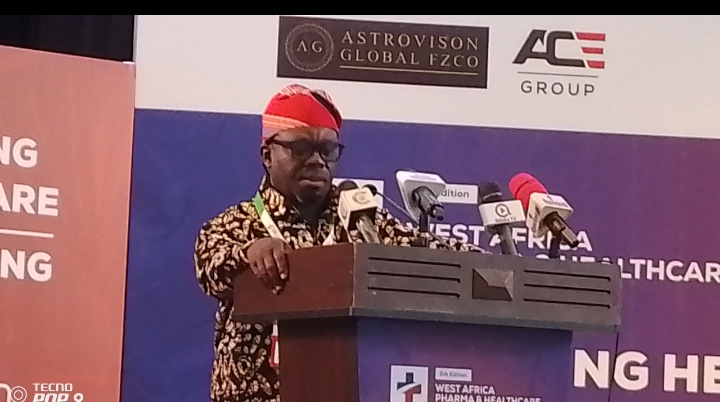
Anthony K. Ameka, Chief Executive Officer of the Federation of Africa Medical Equipment, Disposables and Devices Manufacturers and Suppliers (FOAMEDDMS), has called for urgent continental action to end Africa’s dependence on imported medical products and build resilient, self-reliant healthcare systems.
Speaking as keynote speaker at the inauguration of the 5th West Africa Pharma & Healthcare Expo 2026 held at the University of Professional Studies, Accra (UPSA) on June 8, 2026, Ameka told dignitaries including the High Commissioner of India to Ghana, Honourable Minister of Health, President of Ghana College of Physicians and Surgeons, Rector of Ghana College of Pharmacy, CEO of COA RMCL, and Deputy Director General of Ghana Health Service, that the Expo’s theme “Advancing Healthcare, Connecting Africa” must move from vision to action.
“Advancing Healthcare, Connecting Africa is not merely a vision for better healthcare delivery; it is a continental agenda for health security, pharmaceutical industrialization, technological innovation, economic transformation, and sustainable development,” Ameka said. “The future of Africa’s prosperity will depend on its ability to build interconnected, resilient, and self-reliant healthcare systems that serve both its people and its economies.”
Quoting an Ewe proverb, “Ati deka me tso ave o” – “One tree does not make a forest”, Ameka stressed that regional collaboration is non-negotiable if Africa is to meet its healthcare needs.
He painted a stark picture of the continent’s current reality: Africa accounts for 18% of global population and 25% of global disease burden, yet produces only 3% of global pharmaceuticals. Between 70-80% of medicines consumed on the continent are imported, while over 95% of Active Pharmaceutical Ingredients and 90% of advanced medical devices, diagnostics, and healthcare technologies are sourced from outside Africa.
The COVID-19 pandemic vividly demonstrated these vulnerabilities when African countries faced severe shortages of vaccines, diagnostics, oxygen systems, PPE, and essential medicines as global supply chains came under unprecedented strain,” he noted.
Ameka, however, said the situation also presents Africa’s biggest economic opportunity. With Africa’s pharmaceutical market valued at over US$70 billion and projected to exceed US$100 billion by 2030, and the medical devices market set to grow from US$9.7 billion in 2024 to nearly US$15 billion by 2033, the demand creates room for industrialization, job creation, and technology transfer.
He urged stakeholders to go beyond building hospitals and instead develop a “connected healthcare ecosystem” linking governments, regulators, manufacturers, healthcare providers, research institutions, investors, and communities. Regional integration through the African Medicines Agency (AMA), African Medicines Regulatory Harmonization (AMRH), and AfCFTA, plus the African Union’s target of producing 60% of vaccines locally by 2040, were cited as critical frameworks.
Digital transformation was another focus. With internet penetration rising from 10% in 2010 to over 38% today and mobile phone penetration above 80% in many countries, Ameka said AI, telemedicine, and digital diagnostics can bridge Africa’s healthcare workforce gap. Africa has only 3% of the world’s health workforce despite carrying 25% of the disease burden, and WHO projects a shortage of 6.1 million health workers by 2030.
Our youthful population is our greatest comparative advantage,” Ameka added. “By 2050, one in every four people in the world will be African. We must modernize curricula, expand research capacity, and provide industry-based training so this demographic dividend drives healthcare innovation and manufacturing.
On economics, he argued that healthcare industrialization is a strategic path to diversification and competitiveness. “Africa’s dependence on imported medicines and devices costs billions annually and puts pressure on foreign exchange. Local production can retain that value, strengthen regional value chains, and create hundreds of thousands of jobs across manufacturing, logistics, engineering, and R&D,” he said.
Ameka commended the Expo organizers for creating a platform for dialogue and partnerships, and urged the gathering to be “more than an exhibition” but a catalyst for investment and action.
Africa’s healthcare future will not be determined by the challenges we face, but by the choices we make and the actions we take today,” he concluded. “God bless Ghana, God bless West Africa Expo, God bless Africa.
The 5th West Africa Pharma & Healthcare Expo 2026 runs at UPSA, bringing together captains and stakeholders from the pharmaceutical and healthcare sector to explore solutions for the continent’s health and industrial growth.