Ghana Rice Import Bill Hits GH¢3.23 Billion, Nears GH¢4 Billion In 2025 - Prof Bani Warns
Ghana Rice Import Bill Hits GH¢3.23 Billion, Nears GH¢4 Billion In 2025 - Prof Bani Warns

Story by Fada Amakye
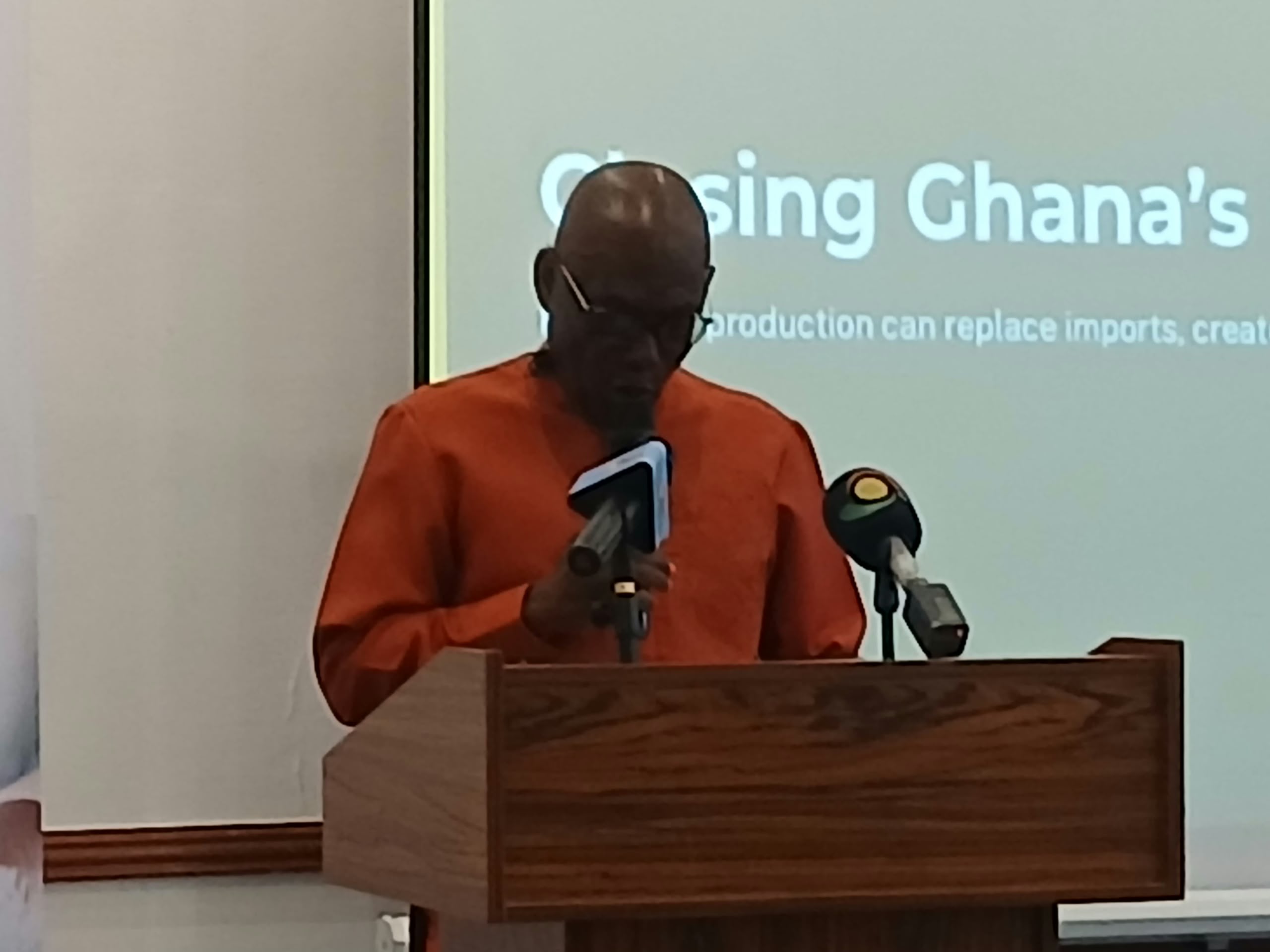
Founder and President of the FPSF Foundation, Prof. Richard Jinks Bani, has warned that Ghana’s rice import bill is threatening the economy and national security.
Speaking at the 5th FPSF Foundation Lecture, Prof Bani said the lecture, which started in 1996 with the late Professor Emeritus Doku as first speaker, has always focused on finding practical solutions to food security, agricultural development, and economic transformation.
This year’s theme is “Rice, a Cobalt Crop for Food Security and Economic Growth.
Prof Bani said rice is one of the world’s most important staple foods and supports the livelihoods of millions of farmers, processors, traders, transporters and others along the rice value chain.
He said for Ghana, the discussion on rice is particularly relevant because despite the country’s considerable agricultural potential, it continues to import substantial quantities of rice to meet domestic demand.
According to him, in 21 years, Ghana’s rice import grew threefold, from 104 million dollars in 2004 to 3.23 billion dollars in 2024.
He attributed the hike to external shocks like COVID-19 in 2020 and 2021, global commodity price shocks, and export restrictions from Vietnam, all of which directly affected Ghana’s import bill and household rice expenditure.
“The figures for 2025 are not any different. We are approaching 4 billion in terms of rice import bill,” he said.
He said the challenge is for the country to strengthen domestic production, increase productivity and competitiveness, but it also provides an opportunity to create jobs, conserve foreign exchange, develop rural economies and promote economic growth.
Prof Bani said the future of rice production must go beyond simply increasing the quantity produced or increasing the acreage for rice cultivation.
“We must focus on productivity, quality, mechanisation, irrigation infrastructure, improved seeds, climate smart agriculture, efficient post harvest management, processing, market and access to finance,” he said.
He also said food security is not achieved by merely producing enough food, explaining that food must be available, accessible, affordable, nutritious and safe.
“If the food is available and you don’t have the resources to buy, you are never going to be food secure. So it’s linked with job creation, income, accessibility to income and revenue,” he said.
He said food security requires more than production and a comprehensive strategy must address the entire food system including production, storage, processing, transportation, distribution, markets and consumption.
“If you produce the rice and we don’t consume as a nation because we classify as Ghana rice, then we are never going to bridge any gap,” he said.
He concluded that food security is national security.
We may have strong armed forces, highly qualified human resources, substantial natural resources, but if the population cannot reliably access adequate, nutritious and affordable food, and hunger persists among the vulnerable, then our national security may be compromised. A hungry man is an angry man,” he said.