WiWASH Marks Menstrual Hygiene Day at St. Thomas Aquinas, Urges Inclusion to End Period Stigma
WiWASH Marks Menstrual Hygiene Day at St. Thomas Aquinas, Urges Inclusion to End Period Stigma

Story by Fada Amakye
WiWASH – Women in Water Sanitation and Hygiene has marked Menstrual Hygiene Day with a call to involve boys in period education, saying male support is critical to keeping girls in school and protecting their dignity.
Speaking at St. Thomas Aquinas Secondary School on June 4, WiWASH President Ms. Solace A. M. Akomeah said the group’s annual May 28 event usually targets girls in deprived schools with donations and education. This year, WiWASH expanded the conversation to include boys.
Every year we go to the deprived schools to mark the day where we donate items and also grant them menstrual hygiene education, but this year the story is different because we want to include the boys,” Ms. Akomeah said. “We want to let the boys know that they also have a role to play in supporting women to properly manage themselves during menstruation.
She explained that stigma and teasing drive many girls to stay home during their periods. “When a girl is menstruating and they stain themselves… some of the boys actually laugh at her, and so it reduces her confidence… when she’s menstruating, she doesn’t even want to go to school… if you stay at home, what the others are learning, it means that you are not part of it. So the women will lag behind.
Ms. Akomeah noted WiWASH previously added its voice to the “Don’t Tax My Pad” campaign and welcomed government’s current distribution of free menstrual hygiene materials to schools. But she said materials alone are not enough if schools lack basic facilities.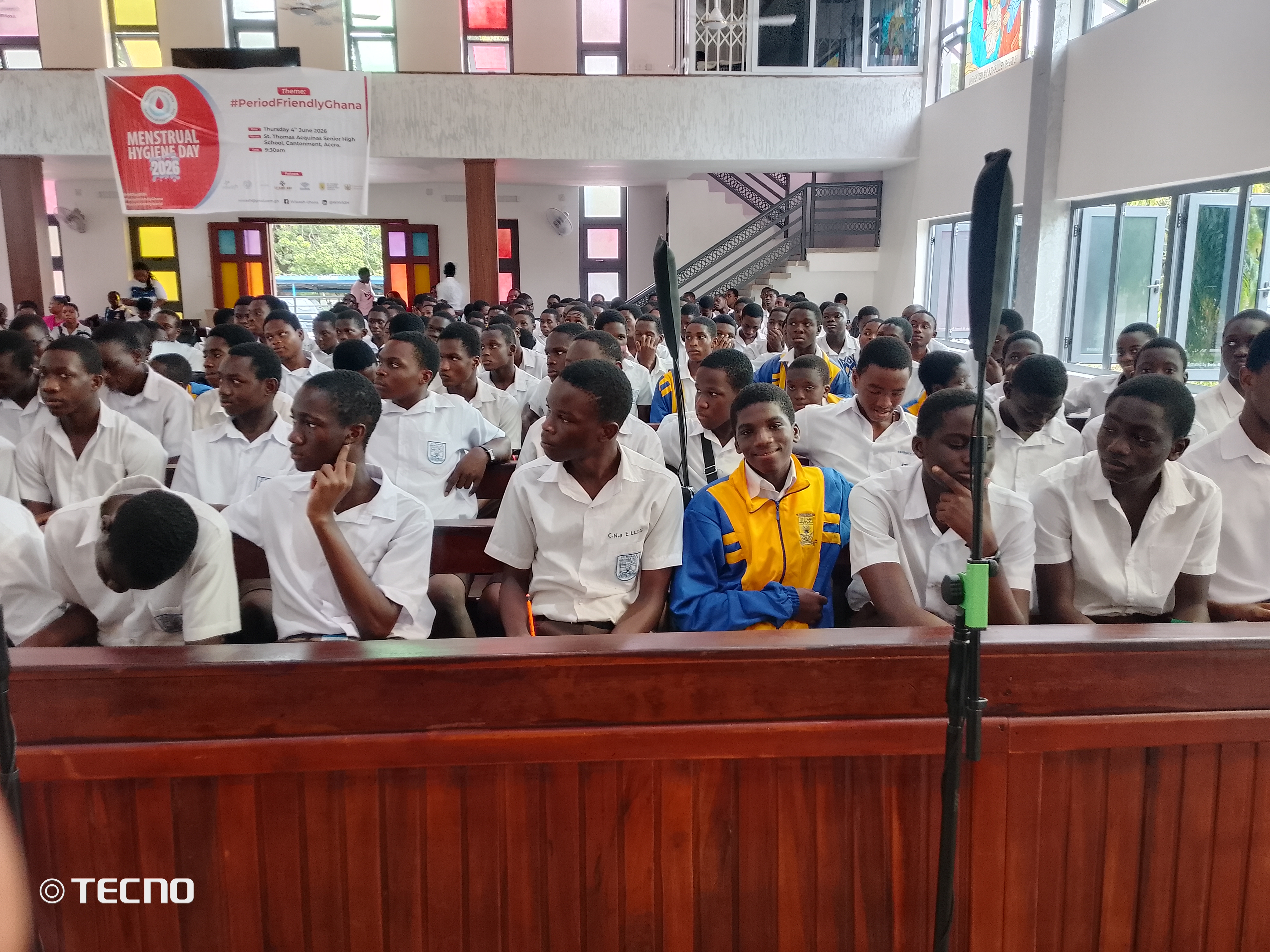
What is important is for Ghanaians, everybody who can support, to also look at deprived schools and try to help them with sanitation materials or facilities. A lot of schools do not have toilets, do not have water, do not have changing rooms for the girls… when the girls are menstruating and a girl has soiled herself, where she has to go and change, they don’t have the right conditions, and so going to school becomes a burden.
She urged NGOs, government bodies, and individuals to support deprived schools with toilets, water, and changing rooms to make menstrual health management possible.
Using a personal example, Ms. Akomeah said boys who understand menstruation can make a real difference. There’s a story where a boy… had enough knowledge about menstruation and had to help his sister during her first menses… the brother, because he was knowledgeable, actually helped her manage herself, put herself together for school. Otherwise, she would have missed school.
Boys can help… they can help their younger sisters at home, their female colleagues, to manage themselves. These are some of the simple ways boys can also help, she added.